alexander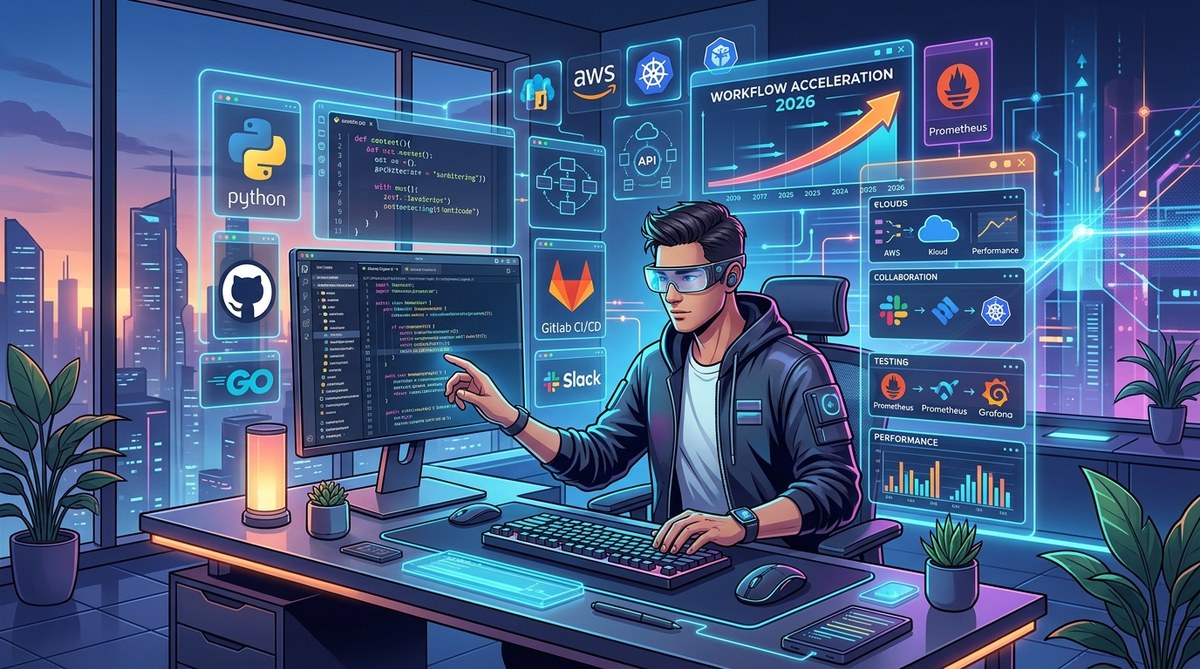
Striking the right balance between efficiency and innovation remains a top priority for software developers in 2026. With a rapidly changing landscape of tools and workflows, knowing which developer tools deliver real value can transform your coding sessions from routine to remarkably productive. Whether you are working on a small project or managing a complex enterprise system, using the best tools available today can make a significant difference.
In 2026, the best developer tools focus on boosting productivity through smarter code editing, seamless collaboration, AI-powered assistance, and streamlined deployment. Staying updated with these tools helps developers work faster, reduce errors, and innovate more efficiently in a competitive environment.
Why Staying Up-to-Date with Developer Tools Matters in 2026
The landscape of software development evolves quickly. Tools that were popular a few years ago may no longer meet modern demands. Today’s developers need solutions that integrate well with existing workflows, support multiple programming languages, and leverage AI to automate routine tasks. Using the best tools for 2026 can help you:
- Cut down development time
- Reduce bugs and errors
- Improve team collaboration
- Accelerate deployment cycles
- Stay competitive in an ever-changing market
Knowing which tools are leading the way is essential for maintaining a high productivity level. Let’s look at the top options that are shaping the industry this year.
Top Developer Tools to Accelerate Your Workflow in 2026
1. Advanced Integrated Development Environments (IDEs)
Modern IDEs are more than just code editors. They come with AI-driven code suggestions, intelligent debugging, and real-time collaboration features. Visual Studio Code remains a favorite, thanks to its extensive plugin ecosystem and built-in AI extensions like GitHub Copilot. JetBrains IDEs, such as IntelliJ IDEA and PyCharm, continue to lead with smart code completion and seamless integrations. Zed, a newer player, offers an ultra-fast editing experience optimized for cloud workflows.
2. AI-Powered Code Assistants
AI tools have become indispensable. They help generate code snippets, suggest fixes, and even write functions based on minimal input. GitHub Copilot is still a top choice, but newcomers like Amazon CodeWhisperer and Cursor are gaining ground. These assistants integrate directly within IDEs, allowing developers to write code faster and with fewer mistakes.
“AI-powered assistants are transforming how developers work, reducing the time spent on boilerplate and repetitive tasks,” says tech analyst Jamie Lee.
3. Version Control & Collaboration Platforms
Version control remains foundational. Git-based platforms like GitHub, GitLab, and Bitbucket continue to evolve with integrated AI features that help with code reviews and conflict resolution. For remote teams, tools like Visual Studio Live Share enable real-time collaboration, making pair programming and team reviews smooth and effective.
4. Testing and Continuous Integration Tools
Automated testing tools like Cypress, Playwright, and Selenium remain essential for maintaining code quality. CI/CD platforms such as Jenkins, GitHub Actions, and CircleCI automate build and deployment processes. The focus in 2026 is on AI-driven testing that predicts risky code changes and suggests targeted tests to run.
5. Containerization and Orchestration
Docker and Kubernetes are still the backbone for deploying applications consistently across environments. Newer tools like Podman and Rancher provide improved security and management features. These tools allow developers to package their code efficiently and deploy confidently in cloud or on-premises environments.
6. Project Management and Workflow Automation
Tools like Jira, Trello, and Notion help organize development tasks. Automation features powered by AI assist in prioritizing work, tracking progress, and predicting project risks. For example, AI can suggest task dependencies or flag potential delays before they happen.
7. Modern API Testing Solutions
API testing tools such as Postman and Swagger have integrated AI to automatically generate test cases, validate responses, and monitor API health. These features are crucial for modern microservices architectures where stable communication between services is vital.
8. Specialized Developer Tools for 2026
- Code Review & Static Analysis: Snyk and DeepCode AI scan codebases for vulnerabilities and suggest remediation.
- Design & Prototyping: Figma and Adobe XD incorporate AI to generate design variations and automate repetitive tasks.
- Documentation: Tools like ReadMe and Docusaurus now leverage AI to auto-generate documentation from code comments and commit messages.
How to Integrate These Tools Into Your Development Workflow
Implementing new tools can seem daunting. Follow this practical process to maximize their benefits:
- Identify pain points: Determine where your workflow slows down — whether in coding, testing, or deployment.
- Research compatible tools: Look for solutions that integrate seamlessly with your existing environment. For example, if you use Visual Studio Code, prioritize extensions like Copilot or Dev Containers.
- Start small: Introduce one or two tools at a time. Use them on a pilot project or a specific task.
- Train your team: Share best practices and tutorials. Many tools offer free resources and community support.
- Evaluate and iterate: Regularly assess if the tools improve productivity and quality. Adjust your setup based on feedback.
Practical checklist:
- Choose an AI code assistant that fits your language and workflow
- Automate testing with AI-enhanced tools
- Establish version control standards and collaboration guidelines
- Use containerization for deployment consistency
| Technique | Mistake to Avoid |
|---|---|
| Relying solely on AI suggestions | Overlooking manual review can introduce errors |
| Introducing too many tools at once | Overloading your workflow reduces efficiency |
| Ignoring team feedback | Not adapting tools to team needs hampers adoption |
Expert Advice on Modern Development Tools
“The most effective development teams are those that leverage the right combination of automation, collaboration, and AI assistance. Staying current with the best developer tools in 2026 can give you a competitive edge and keep your projects moving forward smoothly.” — Tech industry veteran Alex Morgan
Staying Ahead With Innovation in 2026
The tools discussed here are just the beginning. In the coming months, expect new advancements in AI integration, smarter code analysis, and more seamless collaboration platforms. Keeping your toolkit updated is key to staying competitive. Regularly review industry blogs, attend webinars, and participate in developer communities to stay informed.
Final Thoughts: Make Your Development Process Smarter
Adopting the best developer tools in 2026 isn’t just about keeping up. It’s about working smarter, reducing repetitive tasks, and focusing on what truly adds value. Experiment with these solutions, customize your workflow, and watch your productivity soar. The future of development is bright — and tools are the bridge to get you there faster.